 September/October 2026
 July/August 2026
 May/June 2026
 March/April 2026
 January/February 2026
 November/December 2025
 September/October 2025
 July/August 2025
 May/June 2025
 March/April 2025
 January/February 2025
 November/December 2024
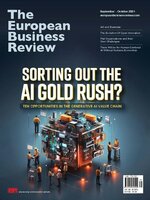 September/October 2024
 July/August 2024
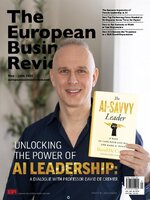 May/June 2024
 March/April 2024
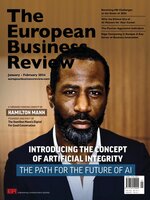 January/February 2024
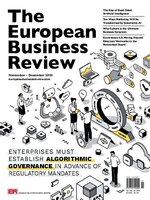 November/December 2023
 September/October 2023
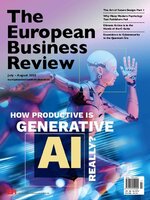 July/August 2023
The European Business Review is a leading business intelligence magazine designed to ensure that its readers make informed decisions. It provides them indispensable insight, current best practices and is their best source of new ideas about what’s important. The European Business Review readers embrace leadership in their jobs and their lives. Their affluence, education, achievements, and wide ranging experience are unparalleled. They are the men and women who shape the world we love, the world we live in.
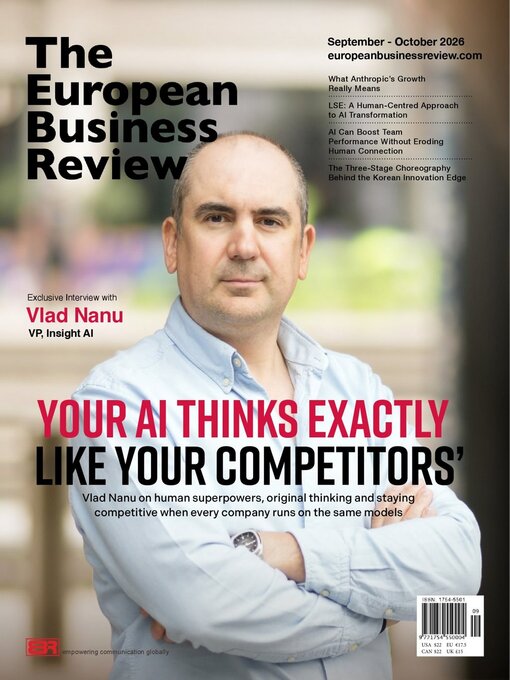
YOUR AI THINKS EXACTLY LIKE YOUR COMPETITORS’ • Vlad Nanu on human superpowers, original thinking and staying competitive when every company runs on the same models
WHAT ANTHROPIC’S GROWTH REALLY MEANS • The technology giants Google, Apple, Facebook, Amazon, and Microsoft were the defining symbols of corporate growth in their era. So it follows, doesn’t it, that we can view the meteoric rise of today’s frontier AI firms as just a rerun of the same processes that powered GAFAM? Well actually, no, because these firms are not simply scaling faster than GAFAM; they are operating under entirely different economic laws.
THE THREE-STAGE CHOREOGRAPHY BEHIND THE KOREAN INNOVATION EDGE • David Dubois is an Associate Professor of Marketing at INSEAD with research interests spanning luxury brand strategy, AI and consumer psychology. In this piece, he examines how South Korean firms innovate through a distinctive three-stage choreography that combines discipline, autonomy and scale. The article argues that this model is not just culturally specific and offers a practical playbook any organization can adapt.
A HUMAN-CENTRED APPROACH TO AI TRANSFORMATION AND HOW TO GET FROM SLOGAN TO MANAGEMENT PRINCIPLE • Few phrases in the AI debate are used as liberally, or as loosely, as "human-centred". Many organisations proudly claim to take a human-centred approach to AI, yet few define how they commit to the principle in practice. Dr Dorottya Sallai, Associate Professor in the Department of Management at LSE and Chair of its AI Working Group, examines what a human-centred approach to AI demands from leaders, and why AI transformation is a leadership challenge.
HOW ARE CORPORATIONS ADAPTING TO AI AND DIGITAL TRANSFORMATION?
AI ADOPTION IS EVERYWHERE. RETURNS ARE NOT. WHY? • What’s driving the AI revolution is, of course, the technology. But there’s more to it than that. To really succeed, organisations must focus on two crucial factors: the people they’re expecting to make it work, and the processes they’re targeting. And, perhaps most importantly, they need to measure the right things.
AI CAN BOOST TEAM PERFORMANCE WITHOUT ERODING HUMAN CONNECTION • Artificial intelligence presents an opportunity to rethink how high-performance teams are built and sustained. AI can enhance the “5C’s” of teamwork (communication, coordination, collaboration, camaraderie, and commitments) by improving coordination, supporting decision-making, and identifying skills gaps. Ambika Zutshi of Empowerworks Advisory and Reshman Tabassum of the Australian Institute of Business focus on gaining the benefits of automation without sacrificing the essential human element.
THE INVISIBLE LAYER OF INTELLIGENCE A Conversation with Sebastien Dui on the Future of Urban Intelligence • To sustain available electrical infrastructure, cities must adopt artificial intelligence to monitor, manage, and plan consumption, turning limited capacity into smarter, more resilient grids.
AI ADOPTION IN FINANCE IS A BOTTOM-UP JOURNEY • Drawing on in-depth interviews with finance executives at various Finnish organizations, Seppo Ikäheimo and Jukka Sihvonen (of Aalto University School of Business) and OlliPekka Lumijärvi (MD of Profit Isle) reveal how finance functions are approaching artificial intelligence. Their study highlights a distinctive bottom-up adoption pattern and...